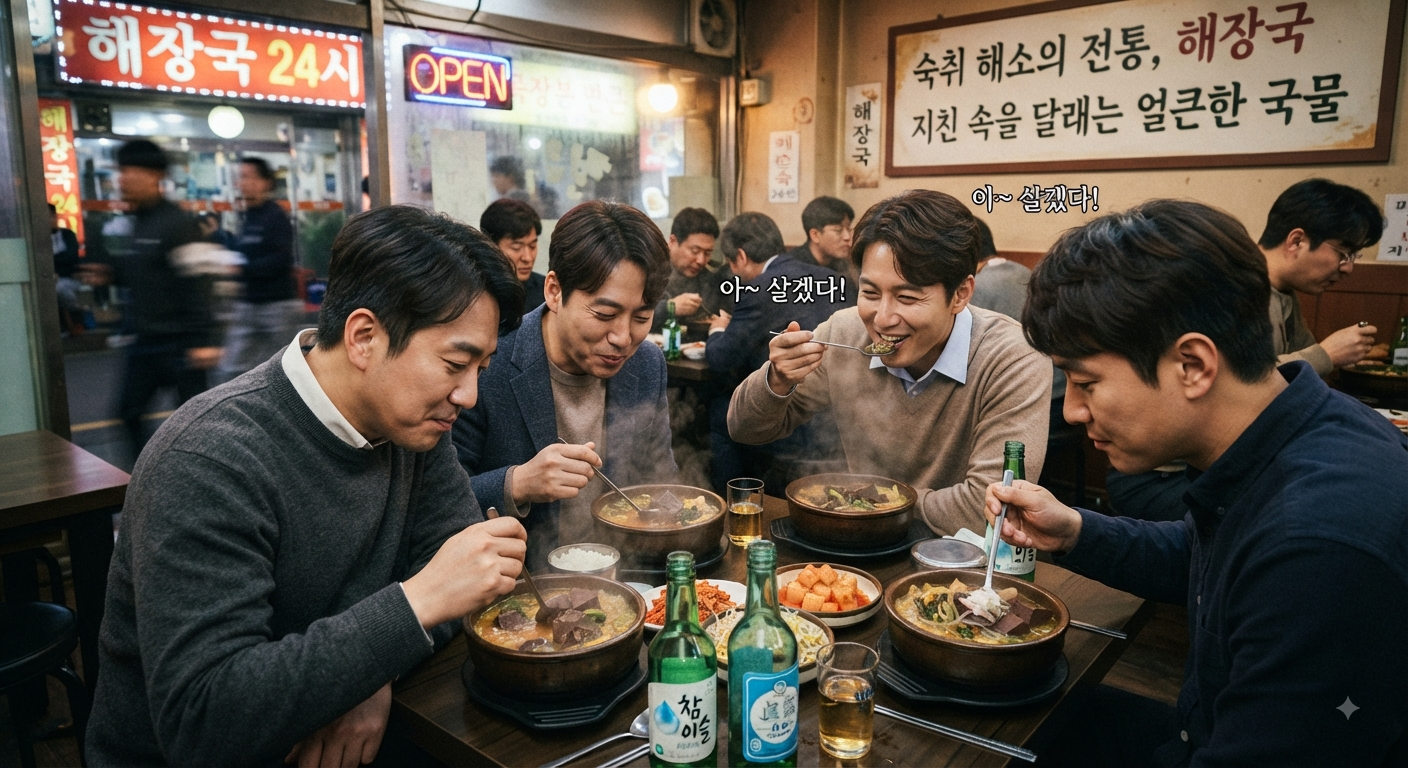
If you experience Korean drinking culture, you’ll quickly learn about “haejangguk,” or hangover soup — a dish specifically eaten after drinking alcohol.
For foreigners, this concept can be surprising.
In many countries, people simply rest or drink water after a night of drinking.
So why does Korea have an entire category of food dedicated to hangovers?
The answer lies in tradition, health beliefs, food culture, and lifestyle habits.
▶️ Historical Origins 🏯📜
• The concept of hangover soup dates back to historical Korea
• People consumed warm broths in the morning to recover from fatigue and alcohol
• Early versions included simple soups made from leftover ingredients
Over time, this evolved into a distinct category of cuisine.
▶️ Strong Drinking Culture 🍶🍺
• Korea has a long tradition of social and group drinking
• Frequent drinking created a need for effective recovery methods
• Haejangguk became a natural solution after nights of heavy drinking
The stronger the drinking culture, the stronger the hangover food culture.
▶️ Health and Recovery Benefits 💪🍲
• Hangover soups are rich in:
- Electrolytes
- Protein
- Vitamins
• Warm broth helps rehydrate the body
• Ingredients like bean sprouts, cabbage, or beef help restore energy
These soups are designed to revive both body and mind.
▶️ Warm Comfort and Digestion 🔥🥄
• After drinking, the stomach can feel sensitive and uncomfortable
• Warm soup is easy to digest and soothing
• Spicy or savory flavors help stimulate appetite
Comfort food plays a big role in hangover recovery.
▶️ Variety of Haejangguk 🍲🌶️
• There are many types of hangover soups, such as:
- Bean sprout soup (kongnamul guk)
- Spicy beef soup
- Blood sausage soup (sundae guk)
• Each region and person has their own preferred style
Variety makes haejangguk a flexible and personalized solution.
▶️ Lifestyle and Convenience 🏙️🍜
• Many restaurants open early in the morning specifically for hangover meals
• Easy to find after a night out
• Fits Korea’s fast-paced lifestyle and late-night culture
Accessibility keeps the tradition alive and practical.
▶️ Final Thoughts 🍲🍻
So why does Korea have hangover soup?
• Historical origins
• Strong drinking culture
• Health and recovery benefits
• Comfort and digestion
• Variety and personalization
• Lifestyle and convenience
For foreigners, having a specific “hangover food” may seem unusual.
In Korea, haejangguk is a natural extension of drinking culture — combining tradition, health, and comfort into one meal.
Why Were Company Dinners (Hoesik) So Important in Korea?
If you talk to Koreans about work culture, you’ll often hear stories about company dinners, called “hoesik.”In the past, these gatherings were not optional — they were considered essential.For foreigners, this can be confusing.Why would eating and
rbphyun.tistory.com
2026.02.09 - [About Life in Korea/Korean Food & Culture] - Why Does Korea Have a Bomb Drink Culture?
Why Does Korea Have a Bomb Drink Culture?
If you drink in Korea, you’ll likely encounter bomb drinks — alcohol mixed by dropping one drink into another, such as soju into beer.For many foreigners, this looks extreme or unnecessary.So why does Korea have such a strong bomb drink culture?The ans
rbphyun.tistory.com
Why Are Side Dishes (Anju) Important When Drinking in Korea?
If you drink in Korea, you’ll quickly notice that alcohol is almost always accompanied by food called “anju”.For foreigners, this may seem unusual because in many countries, drinking alcohol alone is common.So why is anju so central to Korean drinkin
rbphyun.tistory.com
'About Life in Korea > Korean Food & Culture' 카테고리의 다른 글
| Why Does Kimchi Taste Different in Every Korean Household? (0) | 2026.03.30 |
|---|---|
| Why Do Koreans Eat Soup for Breakfast? (0) | 2026.03.24 |
| Why Were Company Dinners (Hoesik) So Important in Korea? (0) | 2026.02.20 |
| Why Does Korea Have a Bomb Drink Culture? (0) | 2026.02.19 |
| Why Do Koreans Turn Their Head Away When Drinking in Front of Seniors? (0) | 2026.02.18 |


댓글